At some point, Milei should realize that he can no longer sustain a person who couldn't even steal discreetly,” stated an opposition deputy to whom Agencia NA had access. Beyond the privilege issues, which will unleash heavy artillery against the spokesperson and coordinating minister, Unión por la Patria, the Frente de Izquierda, the Coalición Cívica, Encuentro Federal, and a sector of Provincias Unidas will request the summoning of the Constitutional Affairs Commission, chaired by the official deputy Nicolás Mayoraz, to urgently process the requests for the official's removal. According to what Agencia Noticias Argentinas learned, the opposition will also request the summoning of the Foreign Relations and Worship Commission to address projects to declare Argentina's neutrality in the war launched by the United States and Israel against Iran. Regarding Argentina's stance on this military escalation, which has shaken the international geopolitical chessboard and has the global economy on edge, there are projects presented by Eduardo Valdés, Juan Marino, and Esteban Paulón, among others. Another issue the opposition will raise in the chamber to harm the government involves preferential-rate mortgage loans granted by the National Bank to officials and legislators of La Libertad Avanza.
The project to amend the Glaciers Law. The bill to amend Law 26.639 on Minimum Standards for the Protection of Glaciers and the Periglacial Environment aims to redefine the scope of protected areas to allow exploration and economic exploitation in certain periglacial areas that theoretically do not perform a clear water function. After its rapid approval in the Senate, the Chamber of Deputies developed a work schedule in committees that included a controversial public hearing format split into two dates, which received opinions for and against from experts and various stakeholders involved in the matter. Due to its limited format, the public hearing excluded thousands of registrants who wanted to present their views live on the topic and had to settle for sending their written submissions or a video. The Glaciers reform seeks to eliminate the automatic ban on extractive activities in periglacial areas. Additionally, the initiative transfers powers to the provinces to decide which zones to protect and which not according to their own criteria, reducing the interference of the central administration. The opposition's hard-line blocs and environmental organizations reject the initiative because it would lift the ban on activities that could affect the natural condition of areas considered strategic reserves of water resources, which are vital for human consumption, biodiversity, and climate balance. The official initiative introduces a clarification when speaking of “periglacial forms” and encourages distinguishing between those that perform functions as “strategic reserves of water resources and providers of water for the recharge of river basins” and those that do not necessarily serve this purpose and are suitable for economic use. This means that with the new law, not all periglacial territory would be safe from economic exploitation, but only those formations that have a demonstrable water function. The current regulation, dating from 2010, protects both visible glaciers and periglacial formations composed of a mixture of frozen fresh water, rock, and sediments.
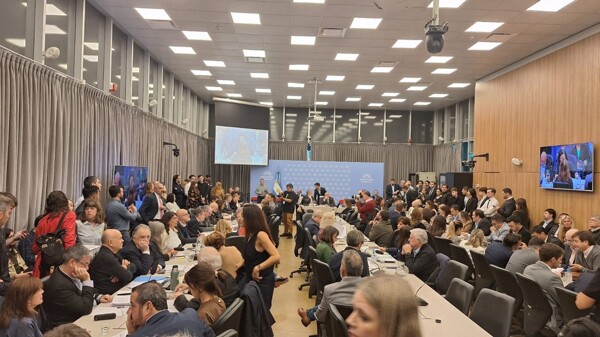
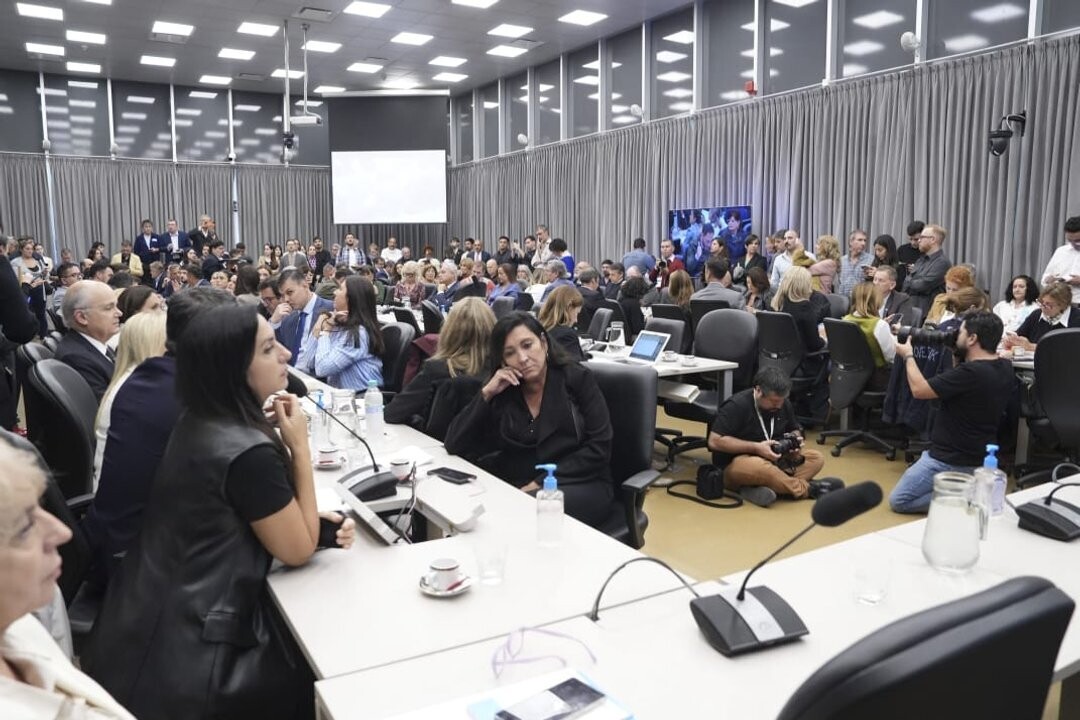
The proposed modification maintains the ban on economic activities on glaciers, but opens the door to developing investment projects in areas that do not have a proven water function. #AgenciaNA It's a lead weight for the government. Buenos Aires, April 7 (NA) – Amidst the bullets of the patrimonial scandal involving Manuel Adorni hitting close, the officialism will attempt tomorrow to notch a victory with the final sanction in the Chamber of Deputies of the mining changes to the Glaciers Law, with the objective of regaining the center of the ring and starting to move past the bad moment it is facing from the point of view of public opinion. The numbers for the vote inject full confidence, and even an opposition deputy with whom Agencia Noticias Argentinas spoke estimated that the officialism, together with its circumstantial allies—which include Peronist deputies from mountainous provinces—will 'reach 140 votes'. Facing the session this Wednesday from 3 pm, La Libertad Avanza counts on the support of PRO, UCR, Innovación Federal, Elijo Catamarca and Producción y Trabajo, but will also add a handful of votes from Unión por la Patria and Provincias Unidas. This is reflected in the majority report with which the officialism and its partners triumphed this Tuesday in the plenary of the Natural Resources and Conservation of the Human Environment and Constitutional Affairs committees, while the opposition signed rejection reports. Due to the adverse forecast regarding the Glaciers project, the opposition's libido will be focused on the first part of the session, as the idea is to flood the chamber with political expressions against Adorni. Each day that passes, new elements appear that complicate the judicial course of the spokesperson and head of Cabinet, who clings to his position only due to the support of the governmental hierarchy, which for now holds. However, this overstated support is not free and the Casa Rosada cannot get the thorny issue of Adorni out of the public spotlight's reflection. Conscious of the damage in terms of image and credibility that the head of Cabinet's scandal is inflicting on the Government, the opposition seeks to make more firewood from the fallen tree and will turn the chamber into a 'firing squad'. 'Adorni has to come here on April 29 but I don't know if he'll make it.'